
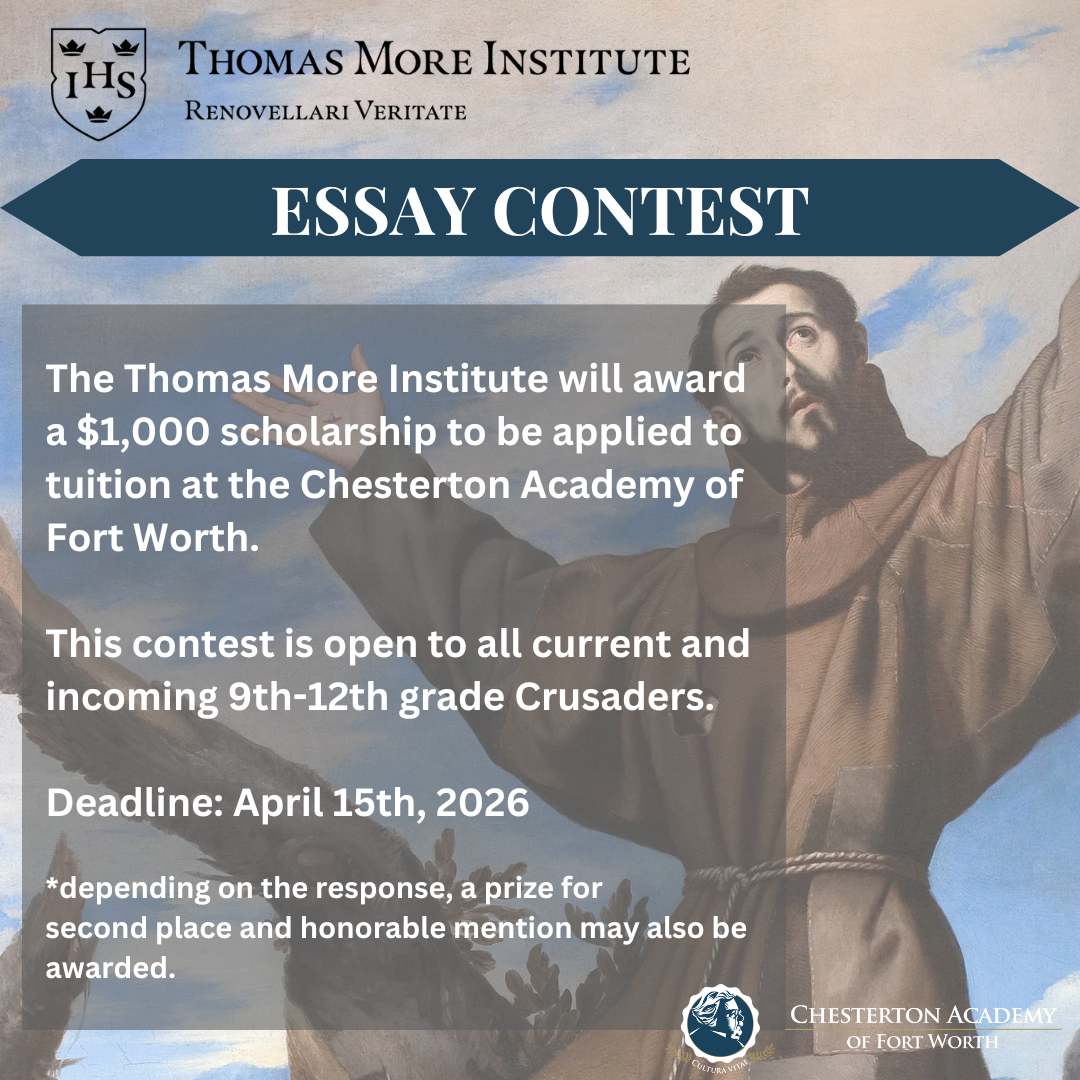
ESSAY CONTEST: Humility in Literature
“Reason is by study, labor, and exercise of logic, philosophy and other liberal arts corroborate and quickened; and the judgment both in them and also in orators, laws and stories much ripened. And although poets are with many men taken but for painted words, yet do they much help the judgment, and make a man among other things well furnished in one special thing, without which all learning is half lame . . . a good mother wit.” -St. Thomas More, from A Dialogue Concerning Heresies
We should aspire to be readers of books, endowed with the habit of reading.
“Not the one hundred greatest books, or any of those they think they ought to read,” as John Senior puts it, “but whatever good book is at hand; and beginning with it, come not just to like it, but to know it and to love it – and then rightly read another and another.” The seminal works of Plato, Aristotle, St. Augustine, and St. Thomas require an imaginative soil enriched not just by Austen, Dickens, Shakespeare, and Twain, but also by Aesop, Andersen, Mother Goose, and the Brothers Grimm. Because what is great builds upon what is good, it is worth our while to read rightly many good books.
In no more than 500 words, write an essay over a book you have read that deals with a theme of humility. In your essay, explain how the characters illustrate the virtue of humility and how it helps to deliver an important theme in the work as a whole.
DEADLINE: April 15, 2026
TURN IN: Through submission form
Dr. Don Carlson will judge this essay contest and pronounce the winner, who will receive from the Thomas More Institute a scholarship to be applied directly to tuition at the Chesterton Academy of Fort Worth.
*depending on the response, a prize for second place and honorable mention may also be awarded.